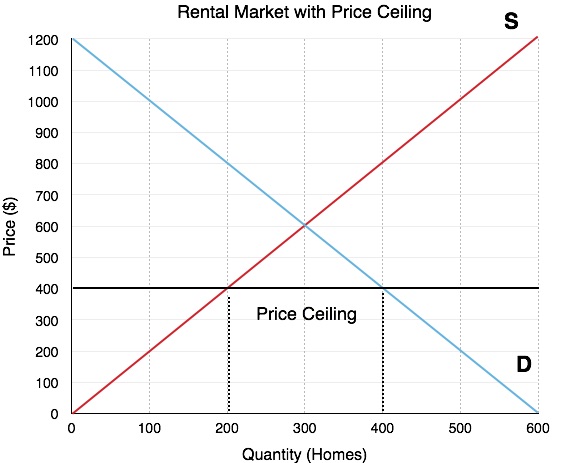
Consequences of Price Floors. A price ceiling is a legal maximum price that one pays for some good or service.
Price Ceilings And Price Floors Article Khan Academy
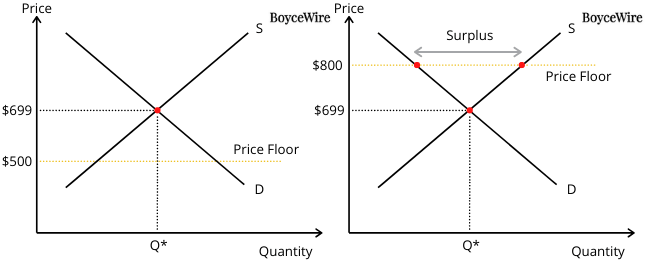
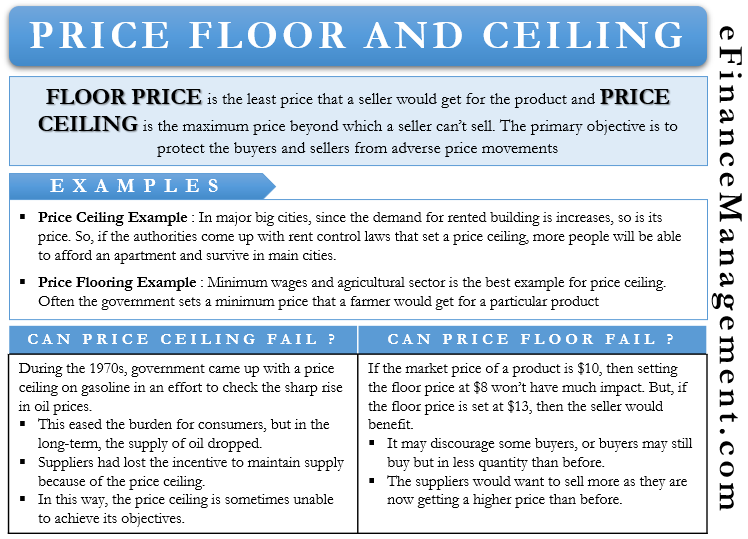
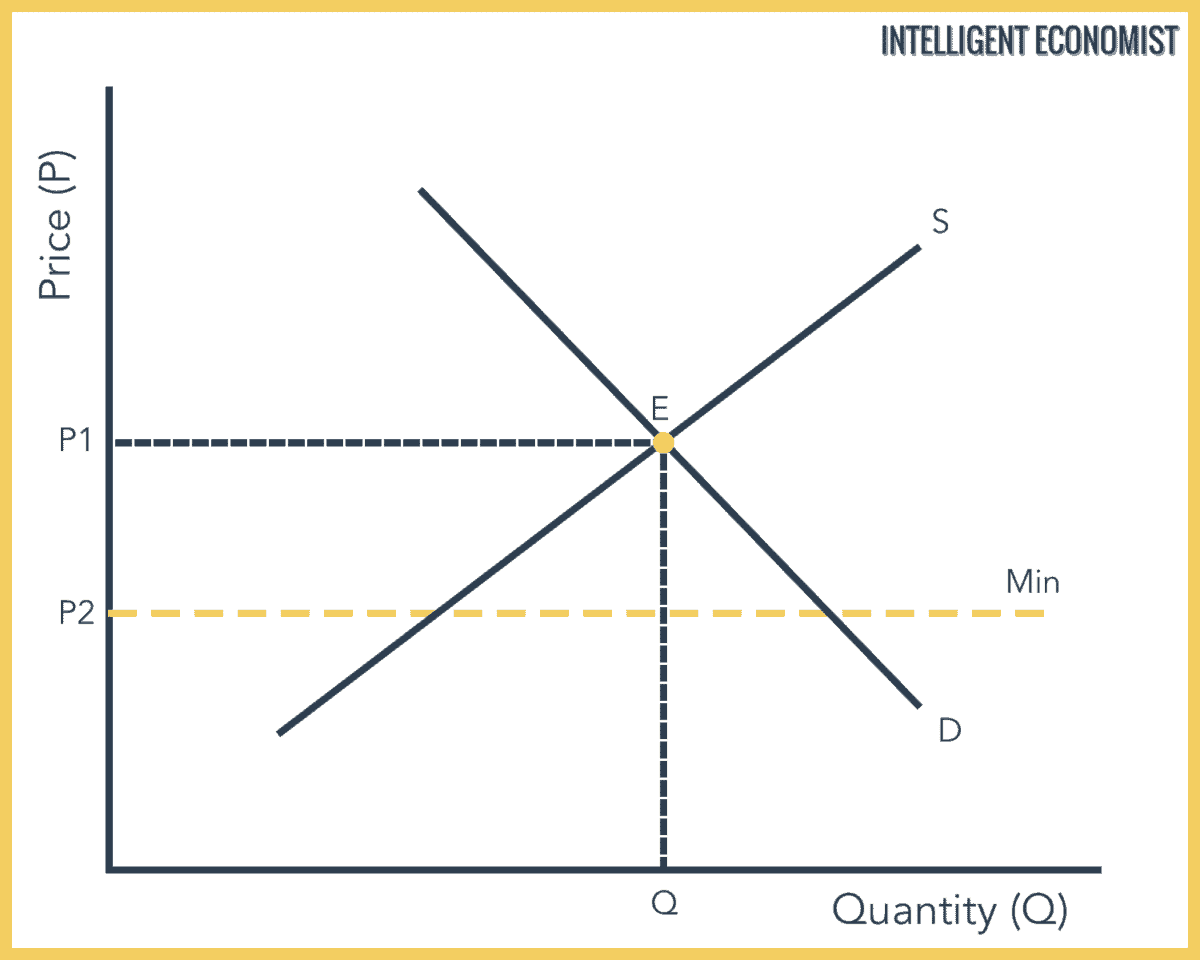
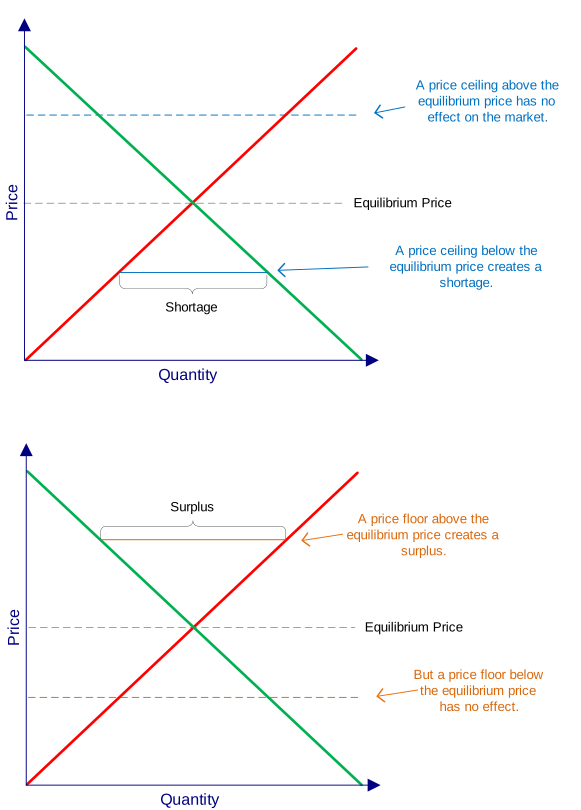
If price floor is less than market equilibrium price then it has no impact on the economy.

Why does the government set price floors. The next section discusses price floors. Price floors are mostly introduced to protect the supplier. Governments often seek to assist farmers by setting price floors in agricultural markets.
A price floor may lead to market failure if the market is not able to allocate scarce resources in an efficient manner. Make some goods more expensive eg. More specifically it is defined as an intervention to raise market prices if the government feels the price is too low.
Government set price floor when it believes that the producers are receiving unfair amount. Minimum prices can increase the price producers receive. The floor price minimum price is another price control that the government uses.
The market price can sometimes be so low that farmers cannot make enough money to support themselves. Reasons for government price controls. This section uses the demand and supply framework to analyze price ceilings.
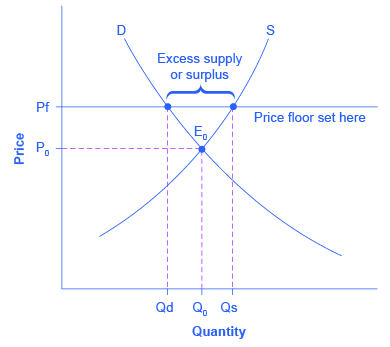
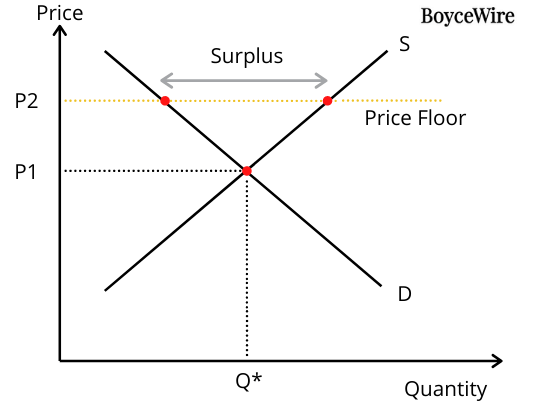
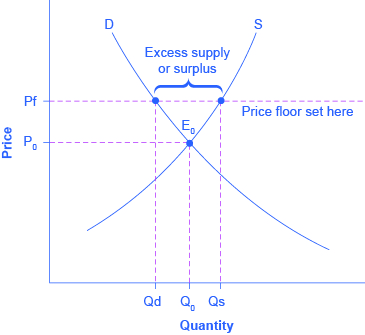
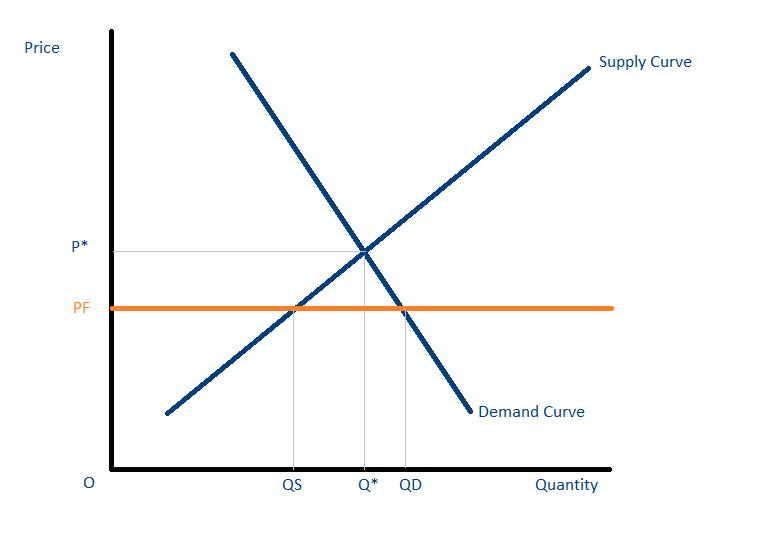
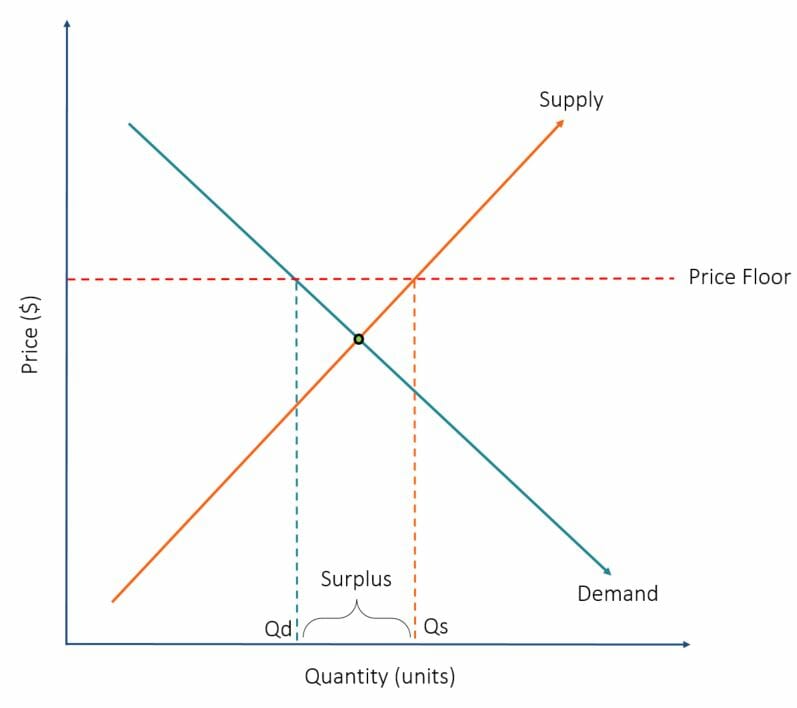
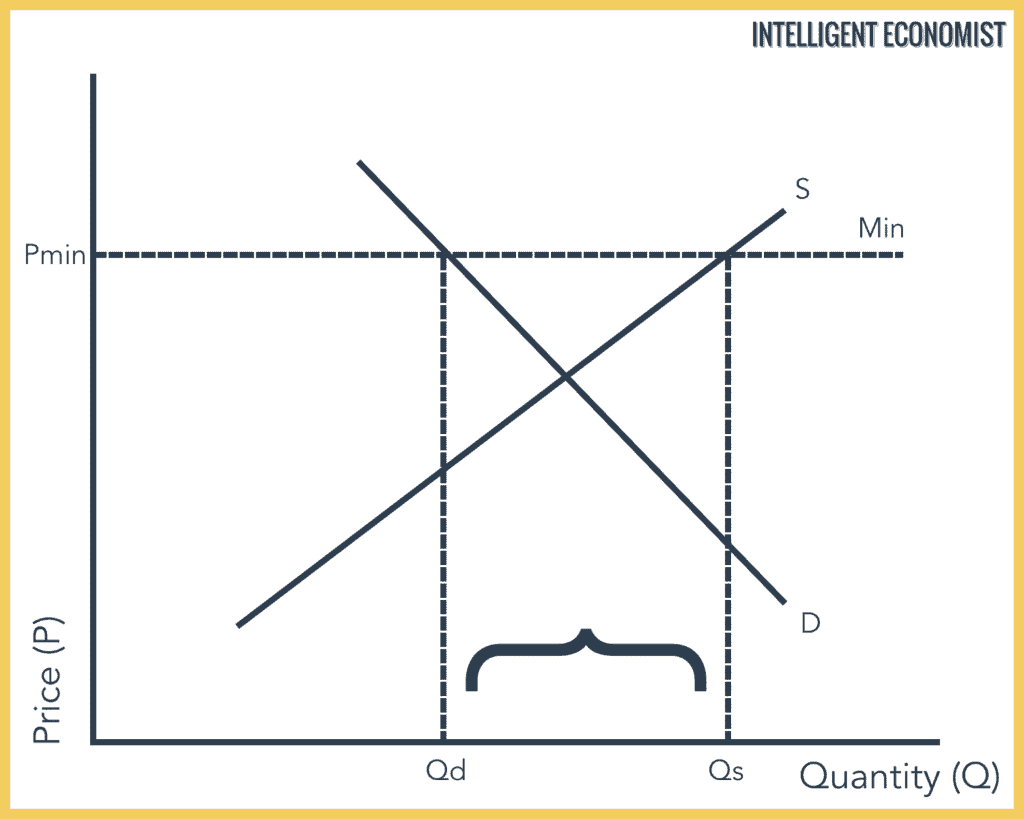
For a price floor to be effective the minimum price has to be higher than the equilibrium price. A government imposes price ceilings in order to keep the price of some necessary good or. There is also less supply than there is at the equilibrium price thus there is more quantity demanded than quantity supplied.
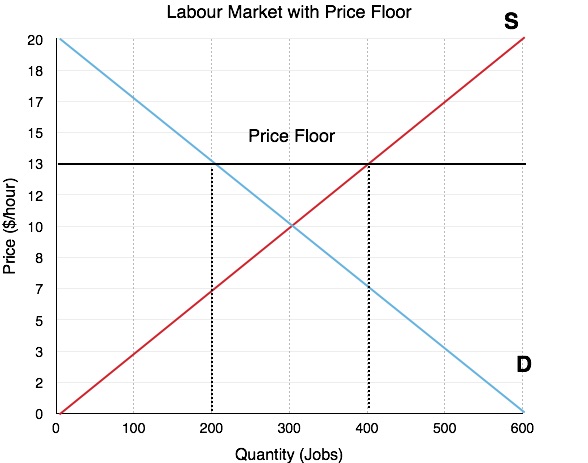
The most common price floor is the minimum wage--the minimum price that can be payed for labor. The Government may believe that a product is socially beneficial and impose a price floor to incentivise producers to supply more of the product. Food to increase revenue of farmers or.
In such cases the government steps in and sets a price floor which can cause problems of its own. Price floors and price ceilings are government-imposed minimums and maximums on the price of certain goods or services. With a price floor the government forbids a price below the minimum.
Price ceilings prevent a price from rising above a certain level. Governments set price floors for a number of reasons but the typical result is an increase of supply and decreased demand. Furthermore why does the government use price floors.
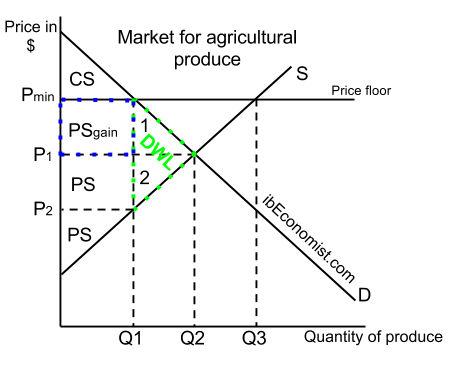
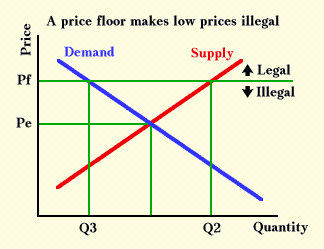
The Qs is greater than the quantity demanded which results in a surplus of the good. In turn it can provide a boost to the suppliers and sellers who may achieve a higher income as a result. Further the effect of mandating a higher price transfers some of the consumer surplus to producer surplus while creating a deadweight loss as the price moves upward from the equilibrium price.
Usually set by law price ceilings are typically applied to staples such as food and energy products when such goods become unaffordable to regular consumers. The supply of flour will decrease but the demand for it will increase. In this case since the new price is higher the producers benefit.
A price ceiling keeps a price from rising above a certain level the ceiling while a price floor keeps a price from falling below a certain level the floor. Price floors which prohibit prices below a certain minimum cause surpluses at least for a time. Governments usually set up a price floor in order to ensure that the market price of a commodity does not fall below a level that would threaten the financial existence of producers of the commodity.
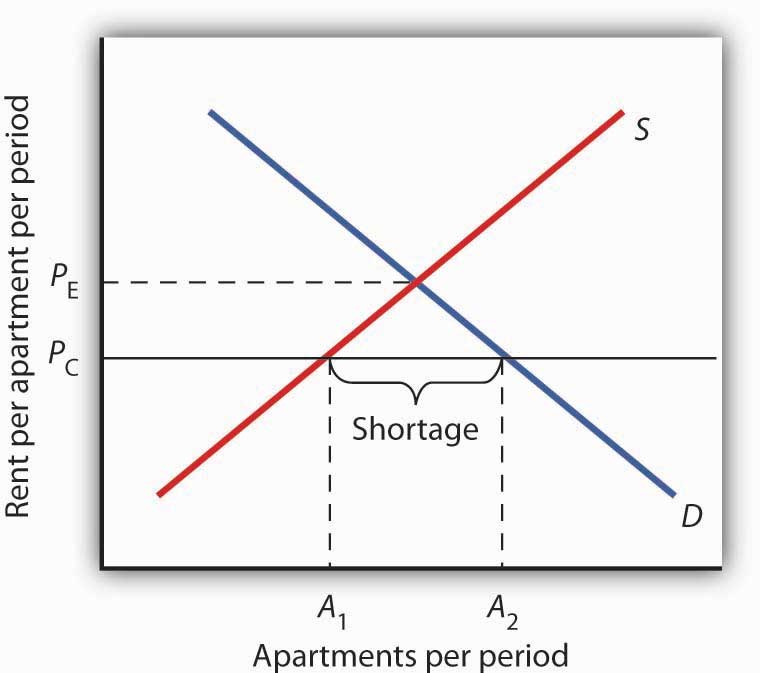
For the price that the ceiling is set at there is more demand than there is at the equilibrium price. Price floor minimum price the lowest possible price set by the government that producers are allowed to charge consumers for the goodservice producedprovided. Why does a government place price ceilings such as rent control on some essential goods.
The next section discusses price floors. They have been used in agriculture to increase farmers income. Price floors are also used often in agriculture to try to protect farmers.
Usually prices are set the market forces where supply and demand meet But there are various reasons governments may wish to intervene in a free market to set prices. Price floors and ceilings are inherently inefficient and lead to suboptimal consumer and producer surpluses but are necessary for certain situations. When a price ceiling is set a shortage occurs.
Price floors are used by the government to prevent prices from being too low. For example many governments intervene by establishing price floors to ensure that farmers make enough money by. In this way price floor raise the incomes of producers.
However minimum prices lead to over-supply and mean the government have to buy surplus. Because quantity demanded is less than quantity supplied a surplus is. For example price floors are sometimes used for agricultural products.
A minimum allowable price set above the equilibrium price is a price floor. This makes it illegal for any company or individual to sell its goods or services below the set minimum price. Price controls come in two flavors.
Price floors are used by the government to prevent prices from being too low. The Commodity Credit Corporation buys surplus milk and cheese and butter from US. Price floors prevent a price from falling below a certain level.
This section uses the demand and supply framework to analyze price ceilings. Suppose that the supply and demand for wheat flour are balanced at the current price and that the government then fixes a lower maximum price. A price floor is an established lower boundary on the price of a commodity in the market.
Price floor is enforced with an only intention of assisting producers. Government agency that buys up surplus agricultural products created because of price floor is called the Commodity Credit Corporation CCC. A maximum price means firms are not allowed to set prices above a certain level.
To keep goods from becoming too expensive How does a firm respond to a higher demand for its goods. However price floor has some adverse effects on the market. Price floors are usually put in to benefit sellers.
It is usually done to protect buyers and suppliers or manage scarce resources during difficult economic times. When a price ceiling is set below the equilibrium price quantity demanded will exceed quantity supplied and excess demand or shortages will result. It is set above the equilibrium price.
Direct price setting In a command economy prices of goods may be set by the government. A price floor is a minimum price set on goods and services usually determined by the government. A price floor is the lowest legal price a commodity can be sold at.
It must be set above the equilibrium price to have any effect on the market.

Effects Of Price Ceiling And Price Floor Businesstopia
Price Floor Definition 5 Effects And 4 Examples Boycewire
Price Floor And Ceiling Meaning Example And More
Price Floor Intelligent Economist
4 5 Price Controls Principles Of Microeconomics

Price Floor Minimum Wage Microeconomics
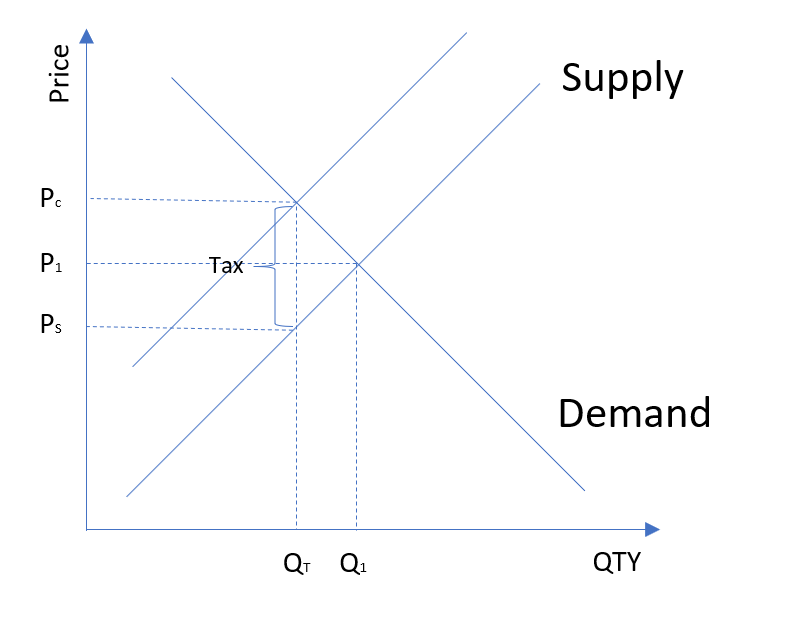
Price Floor And Tax On Cheese Market
Price Floor Definition 5 Effects And 4 Examples Boycewire
Price Floors Microeconomics
Are There Any Successful Stable Economies That Practice Price Floors And Ceilings Quora
4 5 Price Controls Principles Of Microeconomics
Price Controls Price Floors And Ceilings Illustrated
Government Intervention Minimum Price Price Floor Ib Notes

Price Ceilings And Price Floors Course Hero
Price Floor Definition Types Effect On Producers And Consumers
4 2 Government Intervention In Market Prices Price Floors And Price Ceilings Bus 400 Business Economics
Price Floors And Ceilings How Do They Work Corporate Finance Institute
Price Ceilings
Price Floor Intelligent Economist
